 Pulisi
1 / 1
Key Features:
Certifications:
Payment Solutions:
Multimodal Logistics Network:
Packaging Optimization:
End-to-End Visibility:
After-Sales Assurance:
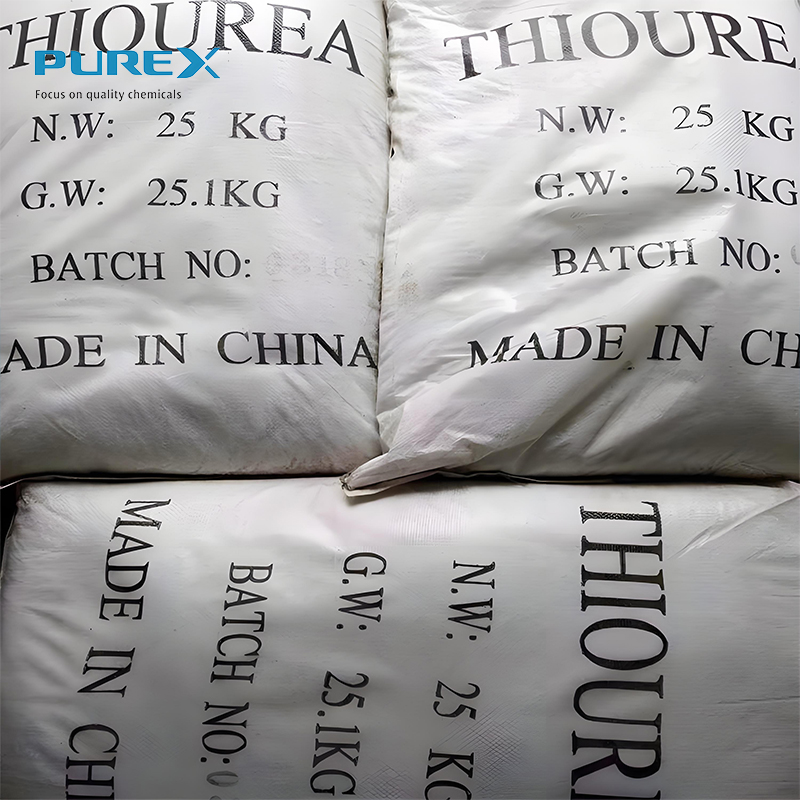
Thiourea holds broad application prospects in the petrochemical and pharmaceutical industries. Many pharmaceutical molecules contain thiourea structural fragments, and thiourea serves as an important intermediate in the synthesis of heterocyclic compounds. For instance, numerous oral hypoglycemic drugs and antithyroid medications on the market today belong to the class of thiourea-based molecules. Additionally, thiourea compounds exhibit excellent insecticidal activity and are widely used in the pesticide field.
In organic synthesis, thiourea is employed to produce derivatives such as methylthiourea, diethylthiourea, diphenylthiourea, and thiourea dioxide. It acts as a catalyst in the production of phthalic anhydride and fumaric acid. It is also used to prepare fast-curing agents for epoxy resins, synthetic resin coatings, and anion exchange resins. Furthermore, it serves as a toughening agent for melamine-formaldehyde resin adhesives.
In photographic materials, thiourea functions as a developer, toning agent, and reducing agent for azo photosensitive paper. It is also utilized as a vulcanization accelerator in rubber, a flotation agent for metal minerals, a dyeing auxiliary for dyes, and a processing aid for textiles, nylon, and polyester fibers. Additionally, it finds applications as a paper treatment agent, electroplating additive, metal antirust agent, insecticide, and fertilizer.
Find answers to common questions about logistics, quality assurance, and product applications.